Monday, August 14, 2017

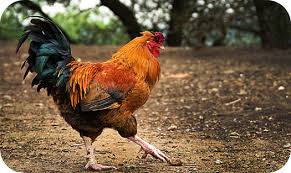
2017 Aug 14 - Roosters, Roosters and Chickens.....

Both of my parents grew up on the Cox Farm, on Hwy 64 between Rocky Mount and Tarboro, at a small community named Kingsboro, NC. Mom's parents and family moved to the Cox Farm in 1949 when Mom was 7 years old. Dad was born in 1939, in a small house beside the railroad tracks.


Mom and the mean rooster:
Not sure how many folks know about roosters. They are very territorial over the hens and will sometimes act aggressively toward humans. When Mom was very young, she was told by her parents to not go out around the rooster they had. He was mean and would spur you. Roosters lets have sharp spurs that could put your eye out, or slice you. Mom had to go to the outhouse, and the rooster ended up in her path. She tried to get away from him, but he chased her and jumped on her, spurring her. She was lucky she didn't lose an eye. Instead the spurs cut her on her right eyebrow. The hair never grew back.


Grandma and the aggressive rooster:

Grandma Rose and Papa had an aggressive rooster that lived on their farm on Kingsboro Rd. Evidently, the rooster made the mistake of being aggressive with Grandma Rosa on more than one occasion. On the last time she and the rooster met, she told him, "You come near me and I'll cook you for dinner". He didn't listen. Grandma had gone after a hen, but the rooster ended up making a huge bowl of chicken salad. You don't cross Grandma Rosa.


When Papa and Grandma Rosa were young, there was a full eclipse, that must have occurred mid day, like the one that is scheduled to occur on August 21st (2017). Dad said as it got dark, the chickens were running toward their roosting area. The eclipse only last a couple of hours. The chickens were so confused for the sun to come up so early. Dad thought that was comical. He cracks me up when he is laughing at these things that have happened.

2017 Aug 14 - Eight er.... Nine Famous People from Rocky Mount NC

https://rockymountreview.com/Home/entryid/95/eight-famous-people-from-rocky-mount-north-carolina

Eight Famous People From Rocky Mount, North Carolina

3/9/2015 12:52 PM

8 famous people from Rocky Mount North Carolina has produced its share of famous individuals. But did you know that several of them have come from our very own Rocky Mount? These men and women have made significant contributions to American culture and education.

Earle Hyman, who played Russell Huxtable on The Cosby Show, was born in Rocky Mount. Hyman is a distinguished African American actor with a 46-year-long career on Broadway. He was only eleven years older than Bill Cosby, despite playing Cosby’s television father.


Although Entertainment Tonight host, Terrance J., was not born in Rocky Mount, he did spend his early years here. He attended Northern Nash High and worked at Soul 92 Jams.


Buck Leonard, one of the greatest baseball players of all time, was born in Rocky Mount. Leonard played with the Homestead Grays of Negro Baseball League, where he earned a reputation as the "Black Lou Gehrig."


A lesser known, but highly influential contributor to the state of North Carolina is Elias Carr, who was born in Edgecombe County in 1839. Carr was instrumental in creating NC State University and was elected Governor of North Carolina in 1892. A building on the UNC Chapel Hill campus is named after him.


Allan Gurganus was born in Rocky Mount. This award-winning novelist, short story writer and essayist has been deemed the “Mark Twain of our time.” He still lives in North Carolina, and his is work is often influenced by and set in the state.


American actress, Mary Elizabeth Winstead, was born in Rocky Mount. She is probably best known for her roles in horror films: Final Destination 3, Black Christmas, The Ring 2, and Abraham Lincoln: Vampire Hunter. But prior to launching her film career, Mary attended the Joffrey Academy of Dance at the age of 11. She later performed opposite of Donny Osmond on Broadway. She’s also a distant cousin of Ava Gardner.


Thelonius Monk
, a renowned jazz pianist and composer, was born in Rocky Mount and spent the first five years of his life here. His parents later moved the family to Manhattan. He is the second-most recorded jazz composer after Duke Ellington and one of only five jazz musicians to have been featured on the cover of Time Magazine. Monk was posthumously awarded the Grammy Lifetime Achievement Award.


Professional boxer, Sugar Ray Leonard, was born in Rocky Mount, North Carolina. He won the gold medal in boxing at the 1976 Olympic Games and turned pro the following year. His well-known defeat of "Marvelous" Marvin Hagler is considered one of the greatest professional boxing matches of all time. He retired in 1997 and was inducted into the Boxing Hall of Fame.


***Added by me 8/14/2017
Charles Linwood "Buck" Williams American retired professional basketball player and former assistant coach for the Portland Trail Blazers. (I graduated with him from Rocky Mount Senior High in 1978.

Saturday, July 15, 2017

20170715 - Joseph and Effie Elizabeth Webb Bridgers Family

Joseph "Jodie" and Effie Webb Bridgers family

Effie Elizabeth Webb Bridgers
11 Nov 1899 - 236 Jun 1980


Effie Webb Bridgers
Effie Elizabeth Webb was my Great Aunt (Grandma Rosa Webb Varnell's sister). She was born in 1904 to Thomas Ruffin and Martha "Weedie" Varnell Webb.

I remember Aunt Effie. She would visit Grandma Rosa from time to time and be there when we visited her. I especially remember seeing her at Grandma Rosa's (and son Doc Varnell) house in Little Easonburg, a crossroads just outside of Rocky Mount on Hwy 64. (between Rocky Mount and Nashville NC). Aunt Effie was someone who terrified me, as she was fiesty and she would admonish you (not her child) in a heartbeat. She definitely marched to the beat of her own drum. She was a short woman and at some point in her life had weighed over 300 pounds. By the time I remember seeing her, she'd lost down to probably 180 pounds.  It was especially obvious that she had lived a hard life. Widowed at a young age with many children. I know she had a temper, so I stayed clear of her. My memories of her are sitting at Grandma Rosa's house on one of the two sofas in the small living room, visiting. She had to be the most unique member of Grandma's siblings.

I found out much later that she had lived a hard life, and her children had lived a hard life and all of her children died very young. They were all dead by the 1990s, and Jodie Bridgers Jr lived the longest. He was 64 when he died.

Jodie Bridgers Sr
11 Apr 1897 - 13 Feb 1950


Joseph Jodie Bridgers Sr died in 1950 and Effie was left to raise the boys alone. She was a force to be reckoned with and gave as good as she got with them. I am sharing any stories I've heard about Jodie Sr, but I don't know much about him.

Children:

1) Willie Jasper BridgersPFC WWII 26 Oct 1919 - 22 Dec 1995 (53)

Didn't have much to do with family.
Buried at Macclesfield Cemetery, Macclesfield NC.
married Edith Marie Brantley Wilkinson 1925 - 2008
Children of Willie and Edith:
*Willie Jasper Bridgers Jr b 1948
*Donald Ray Bridgers SSGT Vietnam Veteran 17 Jan 1950 - 14 Feb 2012
Buried at Bowen Family Cemetery Ormondsville, NC

*Michael Lane Bridgers 4 Sep 1951 - 12 May 1973
Never married
Buried at Maplewood Cemetery in Wilson NC.
(Daughter *Carolyn Bridgers - Living in Greenville NC)
married Lottie Virginia Pittman (1929 - 1985) (dau of Mark Bennett Pittman)


2) Dora Lee Bridgers 10 Jun 1920 - 18 Mar 1944 (24)

(Dora Lee is on the left, Mary Ella on the right)
married Melvin Hulon
Born at Wilson County, NC.
Lived at Pinetops NC.
Died at Tarboro NC from Mycarditis due to toxemia of pregnancy. (24)
Children:
*Mack Daniel Hulon - Mom and son died after childbirth. Heart attack and preeclampsia.

3) Mary Ella Bridgers 30 Mar 1923 - 13 Aug 1960 (37)
married Woodrow Hulon

Mary Ella died in a house fire. Mary Ella's son Joseph Hulon woke her up when he smelled and saw smoke in the house. She instructed him to get their boarder, and get out of the house. 
     She got out of the house, and then went back in. I don't know what she was after, whether she didn't see the boarder or her son or what. 
     The boarder was staring at the house fire and understandably upset when he realized she was not coming back out. Mary Ella succumbed to the smoke and burned to death.
Children:
Joseph Hulon


4) Joseph Clayton "Staton" Bridgers 10 Nov 1924 - 4 jan 1958
Served during WWII.
Cause of Death: Pulmonary Edema due to rheumatic heart disease (34 years old)
Died at Woodard Herring Hospital, Wilson NC.

married Dorothy Leigh Gilbert
Children:
*Staton Bridgers jr 1952 - 2005
*Clayton Bridgers
*Johnny Bridgers

5) Barley Thomas Bridgers 1927 - 1989 (62) *Death massive heart attack.

married Daisy Lee Hulon
Children:
*Barley Thomas Bridgers 1953 - 2022.
*Jodie Bridgers Jr - 1955 - 1975.
*Willie Earl Bridgers 1956 - 2018
*Toby Bridgers 1956 -
*Becky Lynn Bridgers 1957 -
*Danny Bridgers 1959 -
*Peggy Jean Bridgers 1959 - 2017
*Randy Allen Bridgers 1966 - 1993
*Claudie Ann Bridgers 1972 - 1972

6) Melvin Barber Bridgers 29 Apr 1927 - 11 Dec 1989 (57)
Had one lung removed due to cancer or lung disease.  Also had a very bad car wreck.  Lived with some of his brothers last few years.  
married Corinda Sue Hulon 1937 - 1985
Children:
Brenda Lee Bridgers 1958 - 2012

7) Joseph "Jodie" Bridgers Jr 1930 - 1994 (64)
This is his Military Air Force picture.
married unknown
Children: unknown

8) Thomas Ruffin "TR" Bridgers 11 Oct 1932 - 22 Aug 1995 (63)

married Janice ULN
Children:
*Linda Bridgers
*Tony Bridgers
*Vickie Bridgers

9) John Henry Bridgers 23 Apr 1934 - 17 Jun 1994 (60)
married Hilda Pope
Children:
*UFN Bridgers 1955 -
married Ruth Gilbert
Children:
*John Bridgers 1958 -

10) Mack Daniel Bridgers 1936 - 1993 (57) pronounced MackDan-el
married unknown
Children:
*Jenny Bridgers -
*UFN (4 boys)


Stories about Effie:

Tough and proven tough

Effie was tough, and lived tough. An old wives tale is that if you ripped a beating heart out of a turtle, and ate it, you were a tough person. She did this twice in her life, on a dare.

Spare the rod, spoil the child
Effie truly believed in not spoiling the child. Once, when staying or visiting Grandma Rosa at Kingsboro, where She and Papa Oscar Bolden Varnell lived (and where my father was born), my Aunt Nell Varnell (Hagans) talked back to Grandma Rosa. Nell was a teenager and was getting ready to go and had her pants in hand. Whatever she said to Grandma must have sounded like 'sassy talk' to Effie, as Effie charged after Nell as though she would spank her. Nell was in the process of putting her pants on, and was struggling to put them on before she went out the door to get away from Effie. She was stumbling out the door. She and her siblings had reason to fear Effie.

Stories about Jodie Bridgers:
*The All Day Fight
Papa Oscar Bolden Varnell recalled this story to S. Paul Varnell (my Dad). Jodie Bridgers and Mark Bennett Pittman were in-laws as Jodie's oldest son Willie was married to Virginia Pittman. One day at the house in Macclesfield, an argument ensued. Both Jodie and Mark were strapping big stong men. They started to fight in the front yard of the Varnell honeplace on 124 Hwy W. Both men would fight until they were 'give out' and then one would sit down and rest on the porch, the other somewhere on ditch bank until they felt rested, and the fight would resume. Oscar Varnell watched the fight. It went on for hours. I don't think there was a winner and I'm pretty sure they had been drinking or were drinking. Who knows if they even remembered what they were fighting about?

Mark Bennett Pittman seated in front (family behind him)


Thursday, June 29, 2017

2017 Jun 29 - Wilson County, NC - Woodard Family - William Woodard Historical Home/Farmland

(Transcribed from pdf document)
Information from Hugh Johnston, Wills, various interviews, wills, etc. NONE OF THIS INFORMATION CREATED BY ME.


United States Department of the Interior National park Service
National Register of Historic Places Inventory - Nomination Form

1. William Woodard House and Farm
2. William Woodard Jr., House and Farm
3. Woodard House and Farm
4. L.P. Woodard House

The Woodard Family Rural historic District consists of a cluster of houses built by the Woodard Family on land acquired by William Woodard in the 1820s and 1930s. The district is located in eastern Wilson County in the form of Toisnot Swamp an White Oak Swamp, and includes 550.54 acres. The land is gently rolling and the soil is fertile. Although most of the land is cleared and used to raise corn and tobacco there is also a large section of timbered land, particularly in the area of Buck Branch. The district is watered by a number of such small branches and several farm ponds are also located on the property.

The main houses in the district were built between 1830 and 1911 and are arranged east to west along the path of RT. 264 which links the city of Wilson in the west to Greenville (Pitt County), in the east Rt. 264 follows much the same route a the Wilson to Greenville Plank Road, completed in 1853 and an earlier stage coach route which linked Greenville , a port on the Tar River, to rural areas in which is now Wilson County.

The land included in the district was a part of William Woodard's plantation. Woodard amassed at least 1,000 acres of land in the 1830s and 1830s and it was during his ownership (ca.1823-1847) that the area reached the peak of its prosperity. The area also benefited substantially from the economic boom which occurred in the county at the turn of the century when William Woodard's grandchildren owned the property.

The architectural styles of the farmhouses in the district range from William Woodard's Federal plantation house to several mid-nineteenth century vernacular farmhouses to a residence designed in the Colonial Re-survive in the district, especially notable are those associated with the William Woodard (1) and the William Woodard Jr (2) houses. These farm buildings include pack houses, smokehouses, well shelters and tobacco barns. the Woodard Family Rural Historic District expresses the range of activities, tasks and lifestyles of one family who lived in one area for more than one hundred years.

Within the district the farmhouses and their outbuildings are the most important structures. The historical use of the land for agricultural purposes has continued in importance to date and these farmhouses and their associated buildings continue to express the character and diversity of rural life in Wilson County. three out of the four major farmhouses were built on hills in order to better survey their respective farms. the farmhouses are all of frame construction and all are sheathed in weatherboard. The interior plans vary from hall-and-parlor to central hall and no house exceeds two stories. Porches are an important adjunct of all the houses and range from the delightful sawnwork porch dating from the 1870s on the William Woodard House (1) to the Classical Revival porch on the Leonidas P. Woodard House (4) to the modest screen porch on the side elevation of the William Woodard Jr. House (2).

Most of the farm buildings in the district were built in the nineteenth and early twentieth centuries. They are generally grouped quite close around their farmhouses and are built of frame and sheathed in weatherboard like the farmhouses themselves. The largest of the farm outbuildings is usually the packhouse, a large frame structure, one story tall, often with a loft under the gabled roof. However big the packhouse is it is usually overshadowed by a large number of tobacco barns. The tobacco barns are tall, narrow gabled roofed structures, often with a shelter built on one side. Some early log barns exist in the district, but most are frame, covered in weatherboard, asbestos or tin. Metal bulk barns are beginning to replace these tobacco barns. The farm yards lack formal arrangement, but the buildings are located with an eye to comfort and practicality. An example of this is the siting of the tobacco barns, which are filled during the hottest weather of the year. They usually stand in a grove of large shade trees that offer a natural kind of air conditioning to workers on hot days.

The farmhouses are the pivotal structures in the district and will be discussed more fully below.

According to local tradition the oldest house in the district was built for William Woodard by his brother James Bullock Woodard circa 1832 (1). The substantial three-bay two-story Federal plantation house has a one-story rear ell and a one-story gable roof addition to the front facade. Paved double-shoulder 1 to 10 common bond chimneys are located on the gable ends of the house. The chimneys are highlighted by tumbled weathering. Tall nine-over-nine windows are found on the first floor while shorter six-over-six windows are used on the second floor. Square four-light gable windows flank the chimneys and illuminate the attic space. the house, which was originally single pile, was added to both the front and rear before Williams Woodard's death circa 1847. tradition maintains that one of these additions was built to accommodate Elizabeth Woodard's herbal medicine practice. In the late nineteenth century a kitchen ell was also add3ed to the rear. The delightful swanwork porch was probably added in the 1870s.

On the interior a hall-and-parlor plan is followed. An enclosed stair rises from the rear of one of the front rooms. The interior of the house has been altered very little. Flat panel wainscot and mantels with raised panels supported by reeded pilasters are found in the main rooms. the doors and windows have molded three-part surrounds and many of the doors are of the six raised-panel variety. In the rear ell is located a typical mid-nineteenth century mantel with plain pilasters, Dorica caps, and applied diamond motifs. A built-in cupboard flanks the fireplace in this section and the cupboard appears to be of similar vintage as the mantel.

The outbuildings near the house consists of a packhouse, a barn, a crib, two smokehouses and a two-story shed. All the outbuildings are of frame construction. To the east of the main house are three simple turn-of-the-century frame tenant houses, five frame tobacco barns and an ordering pit.


The next house to be constructed on the Woodard property was a small late Greek Revival cottage, the Woodard House (3). This cottage was manufactured from two rooms removed from the Greek Revival house built by Elder William Woodard, Sr. Elder William Woodard, Sr, built his house circa 11855 and in 1911 the two rooms from the side wings were removed along with the kitchen and moved to the present site of the house.

The three-bay, one-story greek Revival cottage has a gabled roof, squat exterior and stretcher bond chimneys with queen closters and curious over-hanging enclosed gables. A one-story late nineteenth century ell with an enclosed prch is attached to the rear. The central trabeated door features octagonal panels which are repeated under the sidelights. A porch with square dcolumns with Doric caps shelters the front facade. The windows have six-over-six sashes, but appear to be replacement windows, as are the windows on the gable ends. aluminum siding obscures the original weatherboards. The interior of the house was not accessible.

At the rear of the house is a frame packhouse, two frame tobacco barns and a frame crib.

The William Woodard jr. house (2) was the next house to be built in the district. According to the family tradition this house was occupied by William Woodard Jr. (1855-1921), but it appears to date before his occupancy, circa 1850. The William Woodard jr. house is similar in form to the Woodard house. (3) discussed above; the three-bay, one-story, single-pile farmhouse has a gable roof, a one-story kitchen/dining room ell and a one-story late-nineteenth century wing on the west elevation. Originally the main block possessed two single-shoulder stepped chimneys; one of these on the west elevation has been removed, but one straight common bond chimney remains on the east elevation. The central trabeated door has four panels outlined by semicircular molding. A porch similar to that on the Woodard house 93) once extended the length of the facade, but has been removed. The addition on the west elevation has an exposed-face single-shoulder common-bond chimney and a three-sided bay window. A screen porch extends along the rear of the addition and another porch has been enclosed along the west side of the kitchen ell.

On the interior a central hall plan is followed and simple mid-nineteenth century mantels are found in the main block. These mantels have chamfered pilasters, Doric caps and a plain heavy mantel shelf. Applied geometric-pattern molding enhances the mantel in the 1870s additoin. Doors and windows, original throughout, are simply treated with the exception of the arch framing the three-sided bay in the 1870s addition. the arch is supported by small carved brackets with a trefoil motif. The breezeway which once joined the main block to the kitchen ell has been enclosed.

The farm buildings on this site show an exception range and include eight tobacco barns, a smokehouse, a large pack house, a barn, a tool room, a shed, a latticed well house and gazebo and three early twentieth century tenant houses. All the outbuildings are of frame construction. Two fo the tenatn houses are located on SR 1521 and one is south of the main house on a farm path.

Th most recent house in the district (4) is said to have been build by Elder William Woodard, Sr. (1830-1910) during the second half of the nineteenth century. The house was enlarged by his son, Leonidas P. Woodard, in 1911. According to the family tradition the original house was a modes single-story farmhouse. Under L.P. Woodard's ownership Wilson contractor C.C. Rackley was hired to raise the house to two stories, and no sign of the older, small house remains today. The present house is a substantial two-story, three-bay Colonial Revival residence. A full attic with central hipped roof dormer is also included in the house. Cross gable wings extend from both sides of the house and two large interior chimneys are symmetrically placed. A deep overhang shelters the facade, and a porch with Ionic Columns, a pedimented entry, and turned balusters wraps around both sides of the house. A porte-cochere, which has lost its original columns, extends from the east side of the porch. The central trabeated door is flanked by large one-over-one windows. The house was recently aluminum sided.

On the interior a central-hall plan is followed. An open stair rises from the front of the hall, and two rooms open off of either side. the woodwork is mainly Colonial revival in style except for two mission style heart pine, probably the product of a local mill work firm.

The outbuildings associated with this house are the least impressive of all those in the district and family tradition maintains that other farm buildings associated with this house were destroyed by Hurricane Hazel in 1954. The outbuildings consist of a barn and three storage sheds, all early twentieth century, and all built of frame.

Although taken singly no one farm complex in the district is out-standing enough to be nominated on its own, with the possible exception of the William Woodard house 91), the totality of this district makes it notable. The preservation of three generations of farmhouses, all built by the same family on the family plantation, on land which continues to be used for agricultural purposes is truly unusual. the buildings included in the district are also fine examples of Wilson County's interpretation of nationally popular styles. this district as a whole is indicative of the character of rural life in Wilson County during the periods in which it attained the greatest prosperity.

The structures in the district, of course, are closely related to the surrounding environment. Archeological remains, such as trash pits, wells, and structural remains, which may be present, can provide information valuable to the understanding and interpretation of the properties in the district. Information concerning use patterns, social standing, and mobility, as well as structural details, is often only evident in the archeological record. Therefore, archeological remains may well be an important component of the significance of the district. At this time no investigation has been done to discover these remains, but it is probable that they exist; and this should be considered in any development of the property within the district boundaries.

The william Woodard House and Farm:
1. The William Woodard House (ca. 1832)
A two-story, late federal style house with a gable roof and a one-story rear ell and a one-room gable-roof addition to the front facade. Exterior end, paved, double shoulder, common bond chimneys on the main block. a one-story sawnwork porch dating from the 1870s shelters two bays of the front facade. large nine-over-nine windows are found on the first floor with six-over-six windows on the second floor. A hall-and-parlor plan is followed with an enclosed staircase rising from the front of the house.

a. Packhouse (ca.1870) One story frame packhouse set on tall brick piers near the road. gable roof, sis-over-six windows. green asbestos siding.

b. Barn (ca. 1900) Large one story frame barn with equipment shelters on both sides. Loft under gable roof. May once have been a stable.

c. Crib (ca. 1900) Small one-story frame crib with gable roof. Green asbestos siding.

d. Smokehouse (ca.1900) One story frame smokehouse with weatherboard siding. Tin roof.

3. Shed (ca. 1930) Two story frame shed with gable roof. Weatherboarded. Farm equipment shelter built onto one side. May have originally been built as a packhouse.

William Woodard Jr. House and Farm
2. William Woodard Jr. house (ca. 1850)
A one-story gable-roof farmhouse with one surviving exterior end chimney. Rear ell and one-room wing (dating ca. 1870) projecting from the west elevation near the front of the house. Three-bay facade with a trabeated door; central hall plan. Set in a grove of pecan trees and oriented toward RT. 264.

a. Eight frame tobacco barns (ca. 1900), some with metal or asbestos siding and some with weatherboards. Tin roofs.

b. Smokehouse (ca. 1900) One-story frame smokehouse with gable roof and weathreboarded exterior.

c. Packohouse (ca. 1900) Large one story frame packhouse with loft and equipment shelters on both ends. Painted white.

d. Barn (ca. 1900) One-story frame barn.

e. Tool Room (ca. ?) One-story frame tool shed similar to smokehouse, above.

f. Shed (ca. ?) One-story frame shed, weather boarded.

g. Tenant House (ca. 1900) One-story frame tenant house, gable roof, L-plan located on SR 1521.

h. Tenant House (ca. 1920) One-story frame tenant house on farm path.

i. Tenant House (ca. 1920) One-story frame tenant house on farm path.

Woodard House and Farm
3. Woodard House (ca. 1855)
A on-story frame house with a shallow gable roof and squat exterior end chimneys. Rear ell dating ca. 1900. Curious closed projecting gables. Front porch shelters a three bay facade and front door is trabeated.

a. Packhouse (ca. 1900) One-story frame packhouse with asbestos siding; farm shelter of logs on south elevation. Tin roof, loft area.

c. Crib (ca 1900) One-story frame crib with tin roof next to packhouse.


L.P. Woodard House (ca. 1855; remodeled 1911)

Two-story frame Colonial Revival house with a hipped slate roof, interior chimneys, and a central dormer. Cross gable wings project from the side elevations. The three bay facade is sheltered on the first floor by a wraparound porch with Ionic columns. The front door is trabeated. A matching porte-cochere extends from the eastern elevation. Central hall plan.

a. Barn (ca. 1890) One-story frame barn sheathed in weatherboard.

b. Three Storage Sheds (ca. 1950) One-story frame sheds sheathed in weatherboard.

There are a total of 29 contributing nineteenth and early twentieth century dwellings and associated farm outbuildings in this nomination.

Statement of significance
The Woodard family Rural Historic District is located in the eastern section of Wilson County, which until 1855 was a part of Edgecombe County and had the largest and most productive plantations in the region. The district is in an area of many small farms, resulting from the division of land which has been in the Woodard family since William Woodard, a prosperous farmer acquired it in 1823. The district, which encompasses 550.4 acres, is principally comprised of four farmhouses and their attendant outbuildings, all of which were built by members of the Woodard family. The farmhouses range in style from a.c. 1832 Federal plantation to a substantial colonial Revival residence remodeled in 1911 from a modest late nineteenth century swelling. Elder William Woodard, William Woodard, Jrl, and Leonidas P. Woodard, all descendants of William Woodard, were were wealthy landholders by virtue of their inheritance and respected members of the community. the historical use of the land in the district for agricultural purposes has continued to date; and the farmhouses and their associated outbuildings continue to express the range of activities, tastes, and lifestyles of one family who lived in the area for over one hundred years.

Criteria Assessment
(A) Associated with the agricultural prosperity in the eastern part of present Wilson County during the nineteenth and early twentieth centuries, the Woodard Family Rural Historic District is indicative of the character and diversity of rural life in the area.

(B) Associated with several prominent members of the Woodard family, including William Woodard, a prosperous farmer; Elder William Woodard, a Baptist preacher; William Woodard, Jr., A businessman and a deacon of the Primitive Baptist Church in Wilson; and Leonidas P. Woodard, a businessman who operated various enterprises in the vicinity of the district.

(C) The Woodard Family Rural Historic District is principally comprised of four farmhouses ranging in style from a.c. 1832 Federal plantation to a substantial 1911 Colonial revival residence and also includes several mid-nineteenth century vernacular farmhouses. these structures, along with their associated outbuildings, are fine examples of Wilson County's interpretation of nationally popular styles and represent an unusual survival of three generations of farmhouses built by the same family on land which continues in agricultural use.


William Woodard came from a landed family. He was the son of David Woodard, a planter of Edgecombe County. The elder Woodard died in 1798 leaving three children, James, William and Sarah. According to his will his sons were to divide his land on the north side of Bear Branch, consisting of 347-1/2 acres. William Woodard was born in 1795 and his father's early death, when he was only three, profoundly affected his upbringing. According to family tradition the two boys, James and William were taught a trade. James was apprenticed to a builder and William to a blacksmith. David Woodard's land was not divided until 1814. It is not known whether William Woodard continued to follow his trade as a blacksmith as a young man, but eventually he became known as one of the most properous farmers in the area. When he purchased 800 acres from James B. Tartt in 1823 he was already a wealthy man, able to pay the enormous sum of $3,200 for the land which became the core of this holdings, It is possible that Woodard sold the land he had acquired from his father's estate to purchase the Tartt land, for there is no indication that he maintained an interest in the family lands.

William Woodard married Elizabeth Simms who came from a prominent agricultural family in the neighborhood of Black Creek in the southern section of the county. Woodard, according to family tradition, built his handsome plantation house on the former Tart property in 1832. His brother, James Bullock Woodard, is said to have been the builder. William Woodard continned to prosper, and in 1833, he purchased an additional 655 1/4 acres from James Tartt, Sr., and five years later, in 1838, James Tartt sold Woodard 212 acres east of Toisnot Swamp.

In 1845 Woodard went on a visit to the state of Texas from which he never returned. Woodard was considered dead by 1847, and his widow Elizabeth Woodard, continued to occupy the plantation. Elizabeth Simms Woodard practiced herbal medicine and family tradition asserts that one of the rooms added to the original house was reserved for her use. After her husband's departeure and before his death was known she purchased 1,186 acres from Elnathan Tartt, attorney for James Tartt of Sumter Country, Alabama. This land was later divided among her children. William Woodard's estate, consisting of 2, 451 acres, was divided between his children patience, William, Warren, James, S. and Calvin Woodard in 1852. of this 2,451 acres 550.5 acres are included in the proposed district.

Elizabeth Woodard was listed as head of household in the 1850 census. According to the census she was aged forty-six and owned real property valued at $2,400. Included in her household wer her sons Warren 9age twenty-four), Calvin (age twenty-two), William (age nineteen), and James (age seventeen), all farmers, her daughter Patience (age fifteen) and her daughters-in-law Winifred (wife of Calvin), Delphy (wife of William) and two grand-children mary (age 10 months0 and francis (no age given). Elizabeth Woodard is listed as owning 1,000 acres of improved land and 1,500 acres of unimproved land. the cash value of the farm is given as $24,000 and although the farm included a wide variety of live-stock, hogs topped the list, numbering 500. The major crops were those that could be used on the farm itself. No cotton was grown, but the farm did produce 200 pounds of wool from its 80 sheep. Indian corn and sweet potatoes were raised in large quantities while smaller quantities of wheat, rye and Irish potatoes were also grown. 800 bushels of peas and beans were produced and 18 tons of hay. Sixty-seven slaves lived on the plantation.

Of Woodard's children his four sons, William, Warren, James, S. and Calvin, became prominent farmers and community leaders. William Woodard and his wife had been supporters of the Toisnot (Primitive) Baptist Church (later the Wilson primitive Baptist church). William Woodard became a member of this, the county's oldest and most influential church, on November 26,1831 and his wife donated money for the new church built circa 1853. Thus it was only natural that Woodard's children would be associated with the church. Two of his sons, James Simms Woodard and William Woodard became Baptist preachers in addition to their other duties. Patience Woodard married Moses Farmer and lived on the five hundred acres west of the district which she received from her father's estates. No house associated with this property has survived. warrent Woodard acquired land in Stantonsburg township upon which he lived and James Simms Woodard moved to Wilson. Elder William Woodard and his brother Calvin were the only two sons to remain on the property that they received from their father's estate. Calvin Woodard's house is still standing east of the district, but some distance from it on the south side of Rt. 264. William Woodard built his own house on the south side of Rt. 264 just east of his father's plantation house. This house is discussed below.

William Woodard's son, William, most often referred to as Elder William Woodard or William Woodard, Sr, was born on November 6, 1830. In 1849 he married Delphia Rountree and some time thereafter he built a modest vernacular farmhouse on the south side of Rt. 264 94). William Woodard Sr, had inherited 450 acres of his father's prime agricultural land in the partition of 1852 and by 1853 the Wilson to Greenville Plank Road, which follows much the same route as the present Rt 264, was completed. Although a road had existed for a time joining Wilson and Greenville, the closest port on the Tar River, the quality of the road left much to be desired and the Plank Road briefly increased the usage of the route and the volume of goods transported to Greenville. William Woodard, Sr., was received into the fellowship of the Toisnot Baptist Church in may 1870 , and was ordained a deacon the following September. He was liberated to preach in 1872 and ordained the following year by Elder P.D. Gold of Wilson. He served for years as the pastor of Aycock's Church and Healthy Plains Church and was a highly respected member of the community.

Elder Woodard succeeded in increasing the holdings left to him by his father and at his death he owned more than 848 acres. According to the 1860 census Woodard owned real property valued at $16,000 and personal property valued at $24, 200. His holdings in that year included 705 acres of improved land, nineteen salves and six slaves houses. his major crops were Indian corn (4,000 bushels), cotton (2137 400-lb bales) and potatoes (600 bushels of Irish and sweet potatoes) He also produced some rice, an unusual crop in Wilson County, and thirty tons of hay. Although Woodard maintained an adequate number of work animals to cultivate the farm and to produce dairy products for his household, he also raised hogs. in 1860, his swine numbered 200, and the value of the animals he slaughtered was set at 1,000. Woodard, like his father reared a family of prominent children. His daughter, Varina married Governor Chales B. Aycock, known in North Carolina for his standardization and upgrading of schools all over the state. After Varina's death, her sister Cora, married Aycock and raised her sister's children. When Elder Woodard died in 1910 he owned the Charles B. Aycock house in Goldsboro, which he bequeathed to his grandchildren. His children William Woodard, Jr., Leonidas P. Woodard and Cora L. Aycock inherited his land. William Woodard, Jr., inherited 287 acres on the south side of the Plank Road, including the William Woodard, Jr. House and the farm (2).

William Woodard, Jr., was born on December 12, 1855 and was educated at one of Wilson's most prestigious private schools, the Wilson Collegiate Institute, by Elder Sylvester Hassell, a respected and innovative educator. Woodard displayed a real aptitude for business, even as a young an and he later became president of Woodard Brothers, wholesale grocers, and the Welfare Welfare Automobile Co. On December 12, 1877 he married Mary Ann Uzzell of Wayne County. Woodard was a deacon of the Primitive Baptist Church and chairman of the building committee for the present Wilson primitive Church, built in 1920. Woodard died in 1921 in Wilson at his home on West Nash Street.

Woodard maintained ownership of the land that he had received from his father's estate and even added to it. The farm property was sold by his heirs after his death.

Although the William Woodard, Jr. House appears to pre-date William Woodard. Jr.'s occupancy it is unclear who actually built the vernacular house. The front of the house, a single-pile central hall plan cottage, appears to date circa 1850. A wing was added to the western elevation in the 1870s and it seems likely that when William Woodard, Jr., married Mary Ann Uzzell in 1877 he house was given to Woodard by his father. The house and farm have passed through several owners since Woodard's death and are presently owned by S.T. Wooten and the house is occupied by Wooten's farm manager.

Leonidas Polk Woodard not only inherited his father's home place but also his household furniture, stock, crops, farming, implements, and his interest in a steam mill on Buck Branch. L.P. Woodard was born on March 6, 1864 and in 1893 he married Minnie B. Applewhite of Moyton in the Stantonsburg Methodist Church. In 1892 Elder William Woodard sold his son a fifty-one acre tract adjoining the family farm on Buck Branch, but Leonidas and later his wife and children continued to live in the family homeplace with his father and his second wife, "Aunt" Ellen Woodall.

Leonidas P. Woodard inherited 325 acres of his father's land including his father's house on the south side of the Plank road (4). According to a documentary photograph taken circa 1906 the house was a one-story three-bay Greek Revival cottage with a shallow hipped roof and one-room wings with exterior end chimneys on the side elevations.

After the death of Elder Woodard, Leonidas hired Wilson contractor C.C. Rackley to remodel and enlarge his father's house. In 1911 the two one-room wings and kitchen were removed from

Monday, June 26, 2017

Edgecombe County NC - Varnell Family - (Papa) Oscar Bolden Varnell

Oscar Bolden Varnell - 1890 - 1959
 Macclesfield, North Carolina, USA


Papa was born August 1890 to parents Joseph and Elizabeth "Betsy" Batts Varnell in a small farmhouse off Hwy 124 West, Macclesfield, NC.
Betsy Batts was the daughter of CSA Col. William Woodard Batts and wife Margaret Peele Woodard Batts.

An unfortunate death during tobacco season:
When Oscar was 14 (1904), his Uncle Bolen (Bolin, Bolden) Varnell was killed by Bolens son-in-law Joe Hines Phillips Sr. Seems Joe and Bolen were arguing about who would be able to use the tobacco barns in the back yard of the Joseph Phillips and Mary Ann Victoria Varnell Homeplace) family home ( Webb Lake Rd a half mile south of Hwy 124 Macclesfield, NC). Joe picked up a cart round (something like a peg that was placed in a trailer of tobacco that would hold the tobacco in the trailer), and smacked Bolen in the head,laying him out. This was a dedinite case of self defense, as Joe Phillips had been attacked by Bolin before, and this day, he ran at Joe Phillips with a piece of wood, meaning to do damage.  It was stated it was just before lunch time and Bolen was looking forward to lunch as they were having his favorite fresh field peas as part of the meal. Also heard that Bolen was left unattended outside while waiting for the Doctor. Doctor came in while the rest of the family was eating lunch (dinner as country folk called it) and when asked if Bolen was ok... Doctor said "OK?" "He's dead" "Split his skull open". Joe was not jailed. I've yet to find out anything in the Edgecombe County records about it.
Now, back to Papa who was 14 at the time. When Oscar found out his Uncle had been killed by Joe Phillips; he went home and got a stool and climbed on it to get the shot gun above the door. Betsy Batts Varnell, his mother, kept kicking the stool out from him; so he couldn't get to the shot gun. This was repeated several times until she made him understand that killing Joe was not the right thing to do. Note: Joe Phillips was never the same after this. He didn't mean to kill his father in law. Alice Tanner (Joe Phillips Grand daughter) stated that Joe walked slow the rest of his life, always looking down, always looking sad.
Papa told his son Paul aka "Goodboy" Varnell , that a year or so later, he was hunting and Joe Phillips crossed his path. Papa had him in his rifle sight, but never pulled the trigger. He thought about it though.


1910 - Papa married his childhood sweetheart when they were both 20. They lived in a small farmhouse just down the road (going toward Macclesfield on Hwy 124, on the left just past the William Varnell farmhouse (Papas Grandfather). It was here that Papa got spooked one night. Something startled him and Miss Ida (Rosa was my Grandmother) went to the back of the house and used a yard broom and was scraping against the house at the bedroom where Papa was standing. He thought he'd heard a ghost. She laughed at Papa and he said "You shouldn't scare me like that". Evidently Miss Ida was a mischievous soul. :)


Miss Ida died a year after her youngest son was born with something called 'Milk Arm'. My Cousin calls it "Milk Arm Cancer". That's what old folks called it. Google knows nothing about i.

Rosa Annie Webb married Papa when Carl was 2 years old and Leroy Varnell was 14. Soon Papa was having children and grandchildren at the same time. There are a couple of the '1st family' Grandchildren who are actually older than Papa's "2nd Family' children Dad aka Goodboy and Clayton aka "Mooch".


1910 - Children of Oscar Bolden and Ida Corbett Varnell
*Leroy Varnell (1912) md Margaret Walston
*Mamie"Sister" Varnell (1914) md Julius Wooten Sr
*Margaret "Betsy" Varnell (1916) md Cooper Griffin
*Woodrow Varnell md Eunice Clark Webb
*Ida "Blanch" Varnell md Edgar Ray Rose
*Oscar "Carl" Varnell md Nanny Gray Webb

Rosa Annie Webb Varnell (Oscar Bolden Varnell)


1925 - Oscar md Rosa Annie Webb (b 1905) September 1925. Their family:
*Robert Perry Varnell (1926) md Ursula R (from Germany WWII)
*Allen Barber "Doc" Varnell (b 1928) never married.
*Joseph Clyde "Joe Clyde" (1930) md Alice "Peajack" Johnson
Nellie Gray "Nell" Varnell (1933) md David Hagans
*Clayton Thomas "Mooch" (1937) md Rebell "Skip" Puckett (divorced), md Sarah Susan Vick
*Sidney Paul Varnell (1939) md Nellie "Faye" Wiggins - (my Dad)

Places he lived:
1) Born in small house off Hwy 124 across road from William Varnell house.
2) Lived at Joseph Varnell House, down path (path starts at end of Webb Lake Road, Macclesfield NC). Graveyard is still at this location.
3) Lived with Ida Corbett at small house on Hwy 124 diagnoally (toward Macclesfield, before Webb Lake Rd) from william Varnell House.
4) Lived at Corbett Farm Rd. Nell and Mooch born there.
5) Lived at Bergum Farm (now Macripine Rd) near Pinetops.
6) Lived at Kingsboro - Cox Farm/Penelo or Joe Bourne Farm. Uncle William Fountain and Ella Varnell lived in a small house behind them. There was an electrical cord that ran from their house to the small house out back to provide one light (in the living room ceiling) for them.
7) Lived at Little Easonburg (street near Greystone subdivision)
8) Lived at Entryway of Candlewood subdivision on Hwy 64 before Little Easonburg. Papa died here.

Bergum Farm:
In 1937, Oscar lived on the farm that is currently where Maccripine Country Club (Maccripine Rd)is (current day is 2017). Dad's brother 'Clayton Thomas Varnell" aka Mooch was born at that farmhouse / Bergum (family) farm January 10, 1937. Dad is the baby, born December 22, 1939. Papa used to walk down the path to the Webb Farm (Ronald Webb farm in 2000, my Uncle CD Webb was born at that farm). Evidently, he was spotted one day on that path, on his knees, swatting....yes swatting a copperhead snake. Papa was drunk and never remembered it. I can't imagine being so drunk you could swat a copperhead with your bare hands.

Abt 1938 - Papa got angry with Uncle Jim Varnell (James Varnell - son of William and Sallie Barnes Varnell) one day, arguing over who would use the mules that day during farming (Macclesfield, NC). Papa moved his family to Kingsboro, NC, the (CSA) Gen. Cox Farm on Hwy 64 between Rocky Mount and Tarboro, NC. Dad was born in a small house beside the railroad tracks on December 22, 1939 on that farm. Also called the Joe Bourne farm.

1942 - Oscar holding a stick of his tobacco crop. Little boy beside him is Clayton "Mooch" Varnell - 3 years old.

Poison sumac:
Papa was told by his father, Joseph Varnell not to touch a specific plant, poison sumac. Evidently, he was stubborn (go figure), and went out and rolled in it, out of anger. He had quite the case of poison sumac rash on his body. Evidently, it was bad enough to trigger shingles in him which he suffered with for the rest of his life. 

Country Air Conditioning:
The only air conditioning in their house at Kingsboro (Cox or Penelo Farm) was open windows and doors at night. Yes - this was before they had to lock doors. He had his own small metal fan (without a cage around it) that sat on his bedside table. Dad remembers hearing him cuss as he would reach over to move the fan closer, and hit the fan edges. It's a wonder he didn't butcher his fingers on those fan petals.

The doors and windows remained open, and it was not unusual for the boys to go out and their friends end up asleep in the bed (several to a bed), it asleep (passed out) on the front porch.  This house was right beside the RR track, where Dad was born.  Currently (2023) KanBan Factory is located there.

Making and storing moonshine:
Papa would make moonshine occassionally.  Dad was about 5 or 6 and papa sat up all night making moonshine with Docs help.  Put it in nice glass jars and hid it under the front of the porch.  Then went to sleep.  Dad was outside playing and the sun was shining just right to show all those bottles of moonshine shining.  Dad woke up Doc and the 2 of them moved the moonshine further under the porch.  Lol

Taking the long way home:
Papa had gone out one day and he had walked ro Tarboro, NC using the railroad tracks.  It was late when he came back and dark.  He actually walked past the stop he wanted,  and realized it when he heard people arguing at a home nearby.  They heard him walk past.  He walked down a mile or so, turned around and snuck back by so not to be noticed.

The still is discovered:
Papa would hide his still in the old barn across the railroad tracks.  One day 2 boys from Fountain prison in Rocky Mount had run away,  and they made it to Kingsboro where they hid and were found in the old barn.  Police found the still and of course no one claimed it as theirs.  It was confiscated and destroyed.  Papa was....disappointed. lol

Cooling it at Little Easonburg:
Papa loved to sit outside on the back porch when they lived at Easonburg in his underwear on hot nights. They lived in an area that was isolated and I'm sure no one could see him.

Inappropriate joke? 
abt 1940 - Papa would ask my Dad (Sidney Paul Varnell) the youngest of 15 children (12 survived birth) "Who were you before you were my boy?". Dad was 3 or 4 or so and would reply "I was your little squirt". This caused Papa to laugh out loud. He was always asking Dad that.

"Don't touch me"

Oscar (and most Varnell's I know) could have a serious temper at times.
Oscar did not hug people. He would say "I can barely stand for a woman to touch me, you know I don't want a man to touch me, even shaking hands".

"Don't touch my hat"
Oscar hated for anything to touch his hat while on his head. Even walking under a tree branch, if it touched his head could cause him to grab the hat and throw it to the ground.

The love of Pepsi
Papa drank water all the time. He didn't drink soft drinks or tea much. Later in life, he was given Pepsi and decided he loved Pepsi. Before he died, he was nearly blind, and crippled from the diabetes. He would sit at home with Rosa and watch tv, see a Pepsi commercial and say very slowly.... "I sure would like me a Pepsi". Grandma would tell him "Well if you promise to sit right here and not get up, I'll walk to the crossroads (1/4 mile away) and get you 6". She would walk down to the country store, and purchase him some Pepsi's. Oscar would sit there and patiently wait.

Navigating at home
Dad stated that Papa could barely walk before he died. He would get up and put his hands on Rosa's shoulders and walk behind her.

Oscar Bolden Varnell 1890 - 1959
Oscar died August 1959, just a few days before his 69th birthday. He is laid to rest beside his 1st wife Ida Corbett Varnell, mother of 9 of his children/7 survived birth (Nettie was child #6 and she died at 3 months old); at the James Varnell graveyard (was William Varnell Graveyard - born 1824) on Hwy 124 West beside the creek and 1/8 mile to the William Varnell family home built in 1879. Daughter Nettie is between Ida and Oscar.

Rosa Varnell was laid to rest in 1988, mother of 6 of Oscar's children, beside her son Joe Clyde Varnell (died 1987), 2 rows behind and other side of the row at the same graveyard. Her son Doc Varnell was buried on the other side of her in 2008.

Scots Irish:
Papa used to tell Dad rhat we were Scots Irish, or feom scot Ireland.  I've completed an ancestry DNA kit and my DNA is all UK and a little Northern Europe.  Irish, Welsh, Scottish and surprise Swedish.  Swedish on Dads side only.   From tying the family tree to DNA, shows locations shere family lived in Europe.  Our Scottish relatives most likely migrated to Ulster Scotland and worked plantations there,  then, migrated ro US from there.  

Papa and Wooten boys:
Papa once lived across from the Wooten family.  His faughter Mamie married a Wooten.  Papa couldn't stand living near them.  They wanted to date his daughters and when he said no (too young), they would sugar his gas tank or do other mischief.  Years later he was talking with Mamies husband Julius where Papa told him to his face that he didn't like the Wootens,  He liked (Julius Wooten) YOU, and even YOU are a son of a b1tch!  Awkward.   

Mom and Dad (Faye and Goodboy) married March on 1959.  They were home visiting from Norfolk Va, drove up to house on Sunset Ave Rocky Mount (Hwy 64), where Candlewood entrance is now...and all the family was there.  Papa had passed away.  Mom and Dad had visited her family first in Warsaw,  so they didn't know.  Dad was 19.  

Mamie Varnell - remembering her Dad.
When Dads (Paul Goodboy Varnell) sister Mamie "Sister" Varnell Wooten was in the rest home on Green Street Macclesfield, Dad leaned over to tell her good ye after a nice visit....  she reached up,  touched his face and said You sure do look like MY daddy.  You can tell she loved Papa, their daddy. And yes, Dad looked like Oscar.  

Saturday, June 10, 2017

2017 Jun 19 - Mowing the grass - Here comes the rain

I'd been to visit Dad at the farmhouse.  Sometimes I do that on weekend afternoons.  I'd told Dad I needed to get home early enough to mow..  I left and I drive the 30 minutes home and I get on the last few miles of the trip and there above my neighborhood (and the river to the west) is dark black clouds.  Not stormy lightning, but obviously "Its going to rain soon clouds".

I saw my neighbor after parking the car.  I told him looks like I missed the opportunity to mow.  He said "You still have time".  Probably get it done.  I begged him to let me know if he heard thunder as I can't hear that over the mower motor.  He promised he would.

I ran inside and changed clothes and then outside to mow.  Chaos is out there with me and I run as fast as I can to mow the grass.  I finish the back yard and get to the gate.  I open the gate, finesse keeping Chaos inside the back gate, and go out into the front yard.  Steven had already mowed the side lot near his side lot.  Here comes the rain.  I mow the front yard sans the ditch bank (Steven had mowed that too) in the rain.  I'm pretty much soaked by the time I finish.  I get back to the back yard and park the lawn power under the lean-to.   Steve is back outside on his deck.  He says "You almost made it".  I say "Yeah, but it's done".

I'm in so much of a hurry to finish the lawn in the rain, that before I had ignored Chaos running back and forth in the yard as he doesn't like rain.  He could have gotten under the lean-to but instead he just ran the fence.  I apologize to him and we run inside the house.  I go to take a shower.  He rubs himself all over the sofa to get dry.  SIGH.

I'll be glad when I can get my debts paid off so I can get someone to mow my lawn.  I'll be glad to get this house sold so I have no lawn to really worry about.  We have someone mow at the farmhouse.

Wednesday, October 12, 2016

Why are the Police at my house?

For some reason or another there have been several times where the Police or Fire Department have been at my house.


Living in the Wild

Recently (2016), I was at the house alone with Chaos(dog). I was again in my bedroom getting ready to go to bed. All at once Chaos ran to the carport door and started barking. A 60 pound Red Nosed Pit Bull, I could tell from his bark there was someone on the other side of the door. My next door neighbors would know to call me first, so I decided not to go to the door. Easy enough. If you break in my home, I will do my best to hurt you. If you stay outside, I'll call the cops and if they find you great...if not.... again, unless you come in the house to hurt me or mine, I'll leave you be. A few minutes later, I saw the flash of light that could only be from a Police Car. Muttering "Damn...it's the cops...what now?", I walked to the carport and somehow kept Chaos in. I yelled out again (remember no doorbell). A very nice police officer introduced himself and told me that they had found someone in the fields/wooded area at the end of the street (other side of the neighborhood) The neighborhood streets are dead ends on entryway streets on the east and west side of the neighborhood, and the fields and woodland area goes to the river. They found possible stolen property on him and asked if anything was missing in my out buildings. I told the officer, I would settle the dog and put on some shoes and meet him in the backyard. I gave him permission to walk in the back yard. I went out the back door into the back yard. Chaos was NOT happy to be left in the house. I walked down the deck and there at the fence. There were 2 police officers in the back yard, and on the driveway side of my fence, there was another two police officers, one being a K9 officer. He was big and gorgeous. I said hello to the human officer and tried not to speak to the K9 officer. THAT was hard. He was cute, but I know better to talk to them.

The K9 had tracked the man to my fence. I honestly thing the man did come to my yard but heard Chaos and wanted nothing to do with my backyard or garage. The officer on the other side of the door at which Chaos had previously been barking said Chaos was my best security tool; as even he was intimidated when Chaos jumped on the door barking. LOL. I opened up the garage, apologized for the mess, and walked through. Everything, even tools were still there. Most people would be scared to go through the hoarder hell that is the garage. There is an antique bed, dresser, desk, kitchen table, computer table, end tables, old sewing machine, and various tools (nothing fancy).....or expensive, and definitely too big to want to carry off. We have another shed, where I keep gas cans, rakes, shovels, etc., but it's locked.

We determined that he must likely didn't come into my backyard. The officer explained that the wind could have thrown off the scent as much as 75 yards. We stared looking at neighbors houses. My next door neighbor owns a SNAP-ON tool business complete with BIG ASS Truck in his driveway. He wasn't there at that time, and the officers knew him and would check with him later. So, soon it would be time for the cops to move on. I know that the suspect had some white power extension cords still in the package...but I couldn't come up with anything missing. Thankfully. :)

I thought I would pee my pants when one of the officers, who remembered seeing the sign with my last name on it...said Beck? Are you related to W Beck? (retired Fireman). Before I answered, he said "Are you his daughter?". I am in my 50s. W. is 6 months YOUNGER than I am. I thought I was going to explode with laughter and a little bit of my psyche was saying "You go GIRL!". BAHAHAHAHAHA!


A fire?
In 2016, I was in my room (again) and it was late. I was up way too late watching TV (about 1am). I heard this POP sound and thought maybe someone had a wreck on the highway a block away. I heard a few other small pops afterwards. Again, if it's outside, I don't go looking for trouble. A few minutes later, I see red lights EVERYWHERE throughout the house. I'm like 'WTH?" I look out my window and my neighbors house diagonally across the street from me has fire behind it. At first I thought the fire was at this house I wanted to buy years ago. It belonged to a Railroad man who I'd known in the 1980s when he dated a co-worker at the Chinese restaurant where I worked. He had built on to his 1970s ranch style house and added almost another 1000 square feet behind his house as a new Den, Master bedroom and Master bathroom. Then, his fiance had run off with another co-worker (same restaurant)'s boyfriend. NEVER SAW IT COMING!!! Anyway, it wasn't his house. Ends up, it was the garage of the house diagonally across the street from me. The flames were way above the pine trees in the neighborhood. The whole garage was totally consumed in moments. The pops I heard where paint cans exploding. I found out later, Mr. J had 40 or 50 years of railroad memorabilia stored in that tiny garage, along with an older model car. Before the 2nd firetruck got to my street, the cops had parked in my driveway. Then as the firetrucks came in , the officer drove his car down and blocked the southern entryway (again, I live on a dead end street). Mr J's house is on the corner of my street and the side street, the cops were at the end of that street blocking traffic.

I remember when the 2nd firetruck came by, we were standing outside watching them, in my yard, on my side of the ditch. I didn't want to get too close. When they stopped, they turned on the side lights and I swear it was daylight. It was an amazing amount of light. I'm thankful that my neighbor was ok. He has now retired from the railroad, yet he has always and still mows his 1/2 acre yard with a push mower. I'm impressed. I'm not sure if it's cause he is 'green' or doesn't like riding mowers or 'cheap'. Of course, he has this huge tall ditch bank he could never drive down, so that's probably why.

No, not a fire, but boy is it hot?.
In 2013, I purchased a security system for the house. The process if the alarm went off was to call my cell phone, and if no answer, send a fire truck. One night in 2014, I left something cooking on the stove and went back to my room. ENOUGH WITH MY ROOM ALREADY. When the water ran out, it spit out some grease and smoked up the room a little. I'd added the smoke alarm that tied into the security system in 2014. Good thing! So - my phone was nearly dead and I left it to go put out the fire or do something to keep a fire from starting. I took the pot, added some water and let the Jennaire stove vent out the smoke. I reset the alarm. Megan and I are there talking about it when we hear that unmistakable sound of 'air breaks' on a big rig, plus some reverberation /echo of the speaker on the truck. I walk outside and there are 6 or so good looking fireman walking my way. I was so embarrassed. I told them everything was ok, but let them come in so they could professionally check things out. They took notes and told me I wasn't in any trouble for not answering my phone (I didn't hear it). Good guys. I'm thankful they got here so fast. :)


Tax time and someone is visiting?

I was working on my taxes on April 14th 2013 and received a text message from a young lady whose grandmother lives behind me. Morgan asked me "What are the Police doing in your front yard?" I was floored. I was sitting on my bed when I got the text and trying desperately to get my taxes completed before midnight. Yeah - I manage to do that more years than I want to admit. I got up and walked to my bathroom and looked out the window. There were 2 police cars parallel to my house on the street, blocking my driveway. By the time I got to the front of the house, someone was knocking on my front door. I opened my carport door and yelled out, 'Hello". (The doorbells do not work at my house). I have no problem with this because if you know me, you know my doorbells don't work. You'll knock. An officer responded to my shout out. Another Police car drove off. The Police officer told me that they were doing neighborhood checks and noticed a black man who was standing near my vehicle under the carport. He saw them and started walking toward the front door. He was standing on my front porch and they asked if he lived here. He didn't. He said he was looking for a friend who would give him a ride.....and that he knew who lived here (no - not). My neighbor is a retired police detective. He keeps an eagle eye on this property. If you come here and I'm not here, he will walk up and ask your business at this location. I love it! :)

So, they took him home (I assume). I assured the Police Officer that no man would be standing in my driveway and walk up to my door like that and I didn't know this person. The next day I found evidence where he tried to rip the back glass window of the SUV hatchback, looking for change. (assumption). No damage, just the door was pulled away but he didn't break the door. he got caught in time. Weird thing, the vehicle belongs to Mom. I was borrowing it while my car was in the shop. Everything calmed down and I haven't heard anything else about that.


Do you smell gas???
When Gregg and I first married (1990), we lived in a tiny 2 bedroom house on O'Berry Street. This house had the worst acoustics. If anyone knocked on the doors (front or back) you couldn't hear them. Gregg had been out and I expected him home at any time. I'd cooked something on top of the gas stove, and then put a cherry pie in the oven. Evidently, When I put the pie in the oven; the pilot light went out, and I didn't know it. I went into the living room and was watching TV. About 15 minutes later, I got up from the sofa and nearly fell. I realized I was dizzy and sick to my stomach. I knew INSTANTLY what had happened. I went into the kitchen and turned off the stove. I went to every window I could find and opened it. I had the phone in my hand and called 911. By the time I'd opened the few windows, I walked outside and sat on the front porch. Gregg drove into the driveway and I yelled at him as he came by. He walked up to me and I told him what was going on. The fire truck drove up, lights and sirens blaring. I was mortified!!!! I told Gregg I'd opened the windows and came outside to be safe. He then explained I was sitting in front of the open door and would have been blown away if the house exploded. sigh.

The firemen walked around, and evidently, I closed the bedroom door at some point. He said another 15 or 20 minutes and the gas would have come down from the ceiling and hit the stove other pilot light and blown up. I still don't like gas ovens. I have a duel fuel stove now. Gas on top and electric oven.

It was a scary night.